Search

February 2, 2026

Digital Tools Are Fueling the Rise of New “Time Exchange” Solidarity Economies

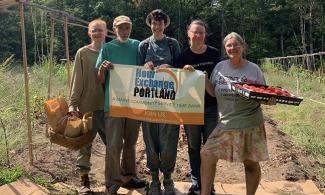
With over 530 active members and more than 101,000 hours exchanged over the past 15 years, Kent’s time bank is one of the most vibrant in the world. 

June 23, 2022

Resident-Owned Resilience

Residents of manufactured housing communities (MHCs) are disproportionately vulnerable to both hazards and displacement. The cooperative ownership model of resident-owned communities (ROCs) pioneered by ROC USA helps MHC residents resist displacement, but little research assesses how cooperative tenure impacts hazard vulnerability. To fill this gap, we conduct a spatial analysis of 234 ROC USA sites; analyze the co-op conversion process; and interview ROC USA staff, technical assistance providers, and resident co-op leaders.


July 4, 2022

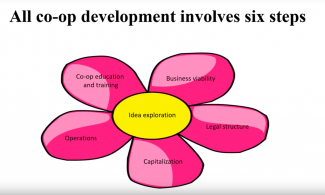
Steps to Organizing a Cooperative

Margaret Bau of USDA Rural Development makes a presentation on the steps to start a cooperative.

August 17, 2020

Health Autonomy Beyond the Pandemic: An Introduction

This issue will explore the possibilities of mutual aid efforts as it relates to our health and wellness.

December 16, 2019

For Folks Who Wanted the Happy Ending to Queen and Slim

The need for fiction with happy endings that show the possibilities for future progress.

February 13, 2014

A Call to Develop a Worker Cooperative Sector in New York City

On Thursday, January 30, 2014, the Federation of Protestant Welfare Agencies (FPWA), a 90 year old nonprofit with the mission to “strengthen human service organizations and advocate for just public policies,” hosted a standing-room only conference entitled “Worker Cooperatives: Jobs for New York City’s Future.”

August 29, 2024

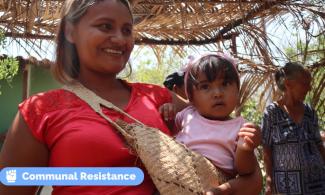
The Commune, a Living Tradition for Pumé People in Venezuela

For many indigenous peoples of Venezuela, the socialist commune is not new at all but resonates with existing and previous social practices that include communal land tenure and self-governance. That is the case for the Pumé community called “Coporo Indígena,” located in upper Apure just outside Biruaca. Due to its small population, this community is registered as a communal council rather than as a commune. 

The Limits of Idealism

The most successful co-ops are those that meet people’s needs better than they could otherwise be met. They’re not successful because they appeal to fans of co-ops.