Solidarity Economy Organizing

November 6, 2023

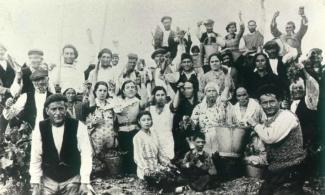
The Spanish Civil War: Lessons in Economic Democracy

The Spanish Civil War and Revolution of 1936 was arguably the 20th century’s greatest experiment in economic democracy. Seizing the opportunity opened by the conflict between the Spanish Republic and right-wing Nationalists, Spain’s workers and peasants built a new economy in the midst of the chaos. 

October 2, 2023

The Imaginal Cells of the Solidarity Economy

This week we are joined by David Cobb, Lydia Lopez, Jyoung Carolyn Park, Kali Akuno, and Petula Hanley to hear about how to use/influence public policy advance individual policies as part of a coherent strategy to democratize the entire economy.

September 25, 2023

Mapping a Local Landscape of Care and Belonging

Equal Care Coop and Clapton Commons are mapping a local landscape of care and support in Clapton Common, Upper Clapton. Using KUMU, a powerful system mapping platform, we are creating an interactive map that makes the often invisible grassroots networks of care and support more visible and accessible to people giving and receiving care.

September 7, 2023

The Banker Ladies Council

Meet the Black women organizers defying anti-Blackness to build a Canadian federation of Rotating Savings and Credit Associations.

August 14, 2023

Solidarity Economy 101: The Kola Nut Timebank Story

In this episode, we have an in-depth conversation with Mike Strode, the Founding Coordinator behind an innovative solution that offers just that: The Kola Nut Collaborative.


July 17, 2023

Economics for Emancipation: Tame, Smash, Escape

Francisco  Pérez and Sarah Wang of the Center for Economic Democracy discuss the Economics for Emancipation online course.

July 6, 2023

Solidarity Economics

Professor Jessica Gordon-Nembhard explores the potential of cooperatives and solidarity economics as pathways towards economic democracy and justice.

January 19, 2023

Black Feminists in the Third Sector

Many countries in the Global North use the term “social economy”—also known as the third sector—to describe economies run by citizens rather than by state or business actors. Over the years, many Black feminist scholars that we have worked with also share the view that the concept of the “social economy” is limited to a European understanding. It fails to acknowledge those actors in the third sector who are excluded from interacting with the government or private sector. There is an assumption that the social economy is “socially inclined” and that it is a sector able to “interact” with the state and capitalist firms. What happens when certain groups of people cannot interact with the state or private sectors due to systemic exclusion? We argue that to transform literature on the social economy, we must use the term solidarity economy. Rejecting the sanitized language of the social economy, we use critical discourse and case study analyses to show the worldwide use of the term solidarity. Our work draws on theories of community economy intentional community to argue that the solidarity economy is a site of contestation and a way to push for social change.

January 17, 2023

Rojava-U.S. Co-op Exchange

This is the 10 December 2022 phone bank and exchange between Americans and Rojava cooperator Kraker.

January 9, 2023

Latin American solidarity economies demonstrate the power of the people

Solidaristic principles prove great in theory, but how do they hold up in practice? Specifically, in communities facing historical divestment and disenfranchisement, can mutualism and cooperativism serve as building blocks for crafting more equitable, sustainable economies and societies?