Search

Our Mutual Friend: The BBC in the Digital Age

The BBC is the heart of the UK’s media system. Yet despite the BBC being publicly funded, the public have no control over how it works.

Politicians have too much power to pressure the BBC, and it is struggling to compete against global streaming services and social media companies. Without radical reform, the BBC faces a bleak future of dwindling audiences and the loss of public trust.

March 16, 2026

The Best Creative Commons License for the Solidarity Economy

If we want to expand the solidarity economy by building the knowledge commons, the best license to use is CC BY-SA.

Why refusing AI is a fight for the soul

From medieval monks who banned tools to weavers burning looms in the 17th century, people have long resisted technologies that they thought would take their jobs or otherwise hurt them. More recently, there has been a wave of resignations at frontier artificial intelligence companies, and opposition to data centers. What do past resistances have in common with current movements?

March 23, 2026

Get Ready for a Grassroots Poetry Slam

find a (relatively) short poem to share and bring it to our May 4th virtual Solidarity Economy Poetry Slam!

South Korean Law on Social Solidarity Economy Moves Forward

The Basic Law on Social Solidarity Economy, which includes the legal foundation for the activities of social solidarity economic organizations such as social enterprises and cooperatives and the establishment of a government-level support system, passed the bill review subcommittee of the National Assembly's Public Administration and Security Committee on the 24th.

How Ownership Actually Works in a Worker Cooperative

“Ownership doesn’t just happen because you filed paperwork. It’s designed.”

Worker ownership can sound deceptively simple: employees become owners (check!), decisions are shared (check!), wealth stays local (check!). But the reality is, successful worker cooperatives don’t emerge from paperwork or ritual alone. They are intentionally designed — shaped through hard governance choices, financial insecurity, and assumed shared expectations.

Shared platforms strengthen grassroots, mutual aid work – yet funders know little about them

As a community-led group, NFFTT does not have its own, independent non-profit or charitable status. Yet, it has secured support and funding from the likes of the Peter Gilgan Foundation, the RBC Foundation, and the Toronto Foundation.

Access to this philanthropic funding would not have been possible without the support of the MakeWay Charitable Society, said project director Julia Girmenia.

We Asked Tax Experts Everything About Mutual Aid

Minnesotans like Bean have redistributed thousands of dollars—in some cases, tens or hundreds of thousands—to neighbors in need in recent months. Everyday people are adopting rent to help support families who have lost their primary earner or have been unable to go to work throughout Operation Metro Surge. 

But as the daughter of an accountant, one small fear has nagged at me since December: Are they going to owe taxes on that money?

March 26, 2026

How to Resolve Conflict Cooperatively

Paul Kahawatte - an experienced mediator working with communities, cooperatives, and social movements - shares the structures and processes he uses to ward off conflict, catch it early, and resolve it in ways that strengthen, rather than fracture. 

March 30, 2026

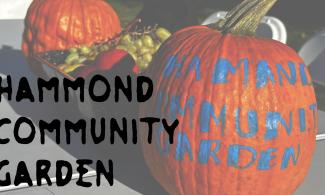
The Hammond Community Garden

We interviewed two members of the Hammond Community Garden about the benefits of creating community space.

Maine farmer trades monoculture for cooperative food farming

Antonio and his partner Amara Watkin-Anson, who both come from farming backgrounds, moved to Maine in 2016 and purchased 15.4 acres of off-grid farmland in Porter. The property has a rich history of being used as a safe haven for artists and the LGBTQ community, the couple said.

Antonio and Amara hope to continue that legacy. They aimed to start a farm that was mission based rather than money based. They wanted to expand fresh food access to communities and ownership opportunities for BIPOC farmers and workers.

Emerging Themes From Conversations About Alternative Land Access

NOFA-VT is deepening its support for collective land access and cooperative and alternative business models. After spending time in 2025 conducting dozens of one-on-one conversations with farmers around the state and holding conversations with partner organizations, this spring, we launched the Land Together Learning Network. This learning network is a ten-month-long cohort program designed to support land seekers and those with land to share in building financial, legal, and relational skills for successful collective projects.

April 2, 2026

Cooperative Enterprise and Market Economy: Chapter 19

The author’s task here is to explain the functioning of a democratic market and how market democratization, actual perfect competition, might be achieved in the face of monopoly, oligopoly, centralization, and other anti-competitive phenomena.

The Antidote to Despair Is Finding our Role in Community Building

As federal overreach erodes a foundational sense of safety across the U.S. that many with proximity to power or privilege took for granted, place-based organizing is a tangible way to bring about real social change—as demonstrated by movements for justice past and present.