
Search

P.J. Christabell is Head of Department and Associate Professor of Economics at University of Kerala.

May 28, 2026

What Kerala’s Member-Owned Institutions Can Teach the World about Social Economics

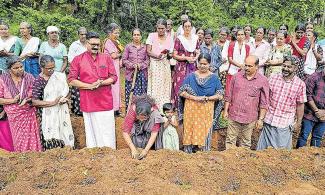
In this study, we survey 1,214 members of Member-Owned Institutions (MOIs) in the state of Kerala, India. Kerala’s MOIs underline the value of citizen engagement and action to improve social provisioning and equity, making it a model for an inclusive economics of global importance.

Cooperation vs Authoritarianism in Spain

Spain is home to some of the world’s largest and most successful worker-owned co-ops, but you might be surprised to learn that these businesses formed under dictatorship. During and after Spain’s brutal civil war, particularly hard-hit areas survived repression thanks to cooperation and local self-reliance. Some endured decades of authoritarian rule and in so doing built an economy — and a culture — that is fundamentally collaborative, caring, and connected to community.


Where Do Dairy Cooperatives Stand Amidst Financial Crisis in India’s Cooperative Societies?

As of yet, several reports have highlighted that brands like Amul (GCMMF) and Mother Dairy have been leading in this sector with significant revenue and dominating the domestic packaged dairy market. 

Apart from national or multi-state cooperatives, some regional cooperatives have, over the period of time, obtained huge recognition. Nandini, under Karnataka Milk Federation, for instance, is the largest dairy cooperative in South India. Similarly, Tamil Nadu's Aavin and Saras, a state-owned dairy cooperative network in Rajasthan, are a few other names. 

New York’s Park Slope Food Coop votes to boycott Israeli goods

Members of Park Slope Food Coop in Brooklyn, New York City, have voted to boycott products from Israel and Israeli settlements in occupied Palestine after a contentious, decade-long debate.

Of the co-op’s 17,000 members, 6,753 cast votes on the issue during a three-hour virtual meeting on 27 May, with 4,551 (67%) in favour, 2,083 (31%) against and 119 (2%) abstaining.

The boycott took effect on May 27, 2026, and products subject to the boycott have been removed from sale.

How CLTs are Powering Co-op Growth in Canada

Thom Armstrong has been the CEO of the Co-operative Housing Federation of BC for over two decades. The federation is also leading an innovation in the use of the CLT model by forming a land trust as a directly owned subsidiary. By pooling the land holdings of a group of co-ops, the land trust can borrow against the existing co-op housing equity, and leverage those funds to rapidly develop more co-op housing.

Brazil's Largest Meat Co-op Argues Against Reduced Work Week

Aurora Coop, considered the largest meat cooperative in Brazil, estimates it would need to hire an additional 11,000 workers on top of the current 51,000 just to produce slightly less than today, should Congress approve the end of the 6×1 schedule and the reduction of the workweek to 40 hours. This calculation comes from the cooperative’s president, Neivor Canton, in an interview published on May 26, 2026, by columnist Estela Benetti of NSC Total.

[...]

Creating Place-Based Systems Change (w/Matt Biggar)

How can communities reconnect with place while shifting away from extractive systems? Matt Biggar, researcher, consultant, and author of Connected to Place, joins Kevin Bayuk to explore how place-based systems change can help regenerate nature, strengthen communities, and build more resilient local economies. Drawing on his background in education, sustainability, and transportation research, Matt reflects on the experiences that shaped his thinking and the frameworks he now uses to understand systemic change.

June 4, 2026

Engaging New Audiences In Co-operatives

Two presentations on how to teach about co-operatives to non-coop audiences and the beneficial results of doing so.

Dan’s Co-op Adventures – May 2026

The next stop was Fireweed Food Community Service Co‑operative Inc., where Ralf Sawatzky, Fireweed’s Market Coordinator, provided a tour and shared insights into the organization’s work. Established in 2016 as a multi‑stakeholder co-operative, Fireweed was created to address challenges within Manitoba’s food system, including supporting consumers in accessing food that reduces the overall ecological footprint.

June 8, 2026

New Forms of Rural Resurgence Through Commoning and Care

I interviewed Bianca Elzenbaumer for my latest podcast of Frontiers of Commoning (Episode #75) to learn more about the group’s very different vision of development.

Before the State Showed Up: Black Mutual Aid as the Infrastructure of Our Democracy

Mutual aid has always emerged most visibly where systems fail.

For Black people, exclusion from formal institutions was not an occasional disruption but a defining feature of life in the United States. Throughout slavery, Reconstruction, Jim Crow, and the twentieth century, Black communities routinely faced exclusion from healthcare, housing, education, insurance systems, banking networks, and public welfare programs.

In response, they built parallel systems.

Rwandan cooperative helps members improve livelihoods

Members of Koperative Abizerwa Byumba [KAB], based in Ruvune Sector in Gicumbi district, have continued implementing agricultural and financial initiatives that have helped boost household incomes and strengthen food security.

One beneficiary, Beatrice Nyirabaligira, says joining the cooperative transformed her family’s circumstances.

June 11, 2026

A Glimpse Into New York’s Cooperative Ecosystem

Ebony Gustave writes about touring several cooperatives in the Hudson Valley as part of the Cooperative Leaders & Scholars Fellowship.

Spring Forum 2026 Brings Members Together

On May 24, co-op members, leaders, staff, and sector partners from across British Columbia gathered for CHF BC’s Spring Forum 2026. Guided by the theme Community Starts Next Door: Where neighbourly connections build community, the day explored how everyday connections between neighbours create stronger, more resilient co-op communities.

Steve Dubb is strategic initiatives editor at Shelterforce. Prior to Shelterforce, Steve worked as senior editor of economic justice at Nonprofit Quarterly. Before that, he worked at The Democracy Collaborative—where he authored, co-authored, and edited numerous reports; participated in and facilitated learning cohorts; and helped build the field of community wealth building. He was also previously the executive director of NASCO (North American Students of Cooperation), a U.S. and Canadian association of housing cooperatives, focused on campus communities. Steve has authored and edited multiple books. Most recently, he co-edited (with Raymond Foxworth) Invisible No More: Voices from Native America (Island Press, 2023). Steve is based in Boston, Massachusetts, and actively volunteers in the area with multiple groups on economic justice work.

June 15, 2026

In Eugene, Housing Advocates Call for a Tenant Right to Purchase Act

Housing advocates in Eugene, Oregon, are seeking to create a legislative framework that would allow tenants to collectively acquire multifamily buildings when a building comes up for sale.

A Crushed 1891 Strike by Black Farmer Cooperatives Holds Keys to Economic Justice Today

Houston County, TX, December 11, 1886. Sixteen Black men gathered on a farm and started something that would grow into one of the most ambitious economic organizing efforts in US history. They called it the Colored Farmers’ National Alliance and Cooperative Union (CFNACU). Within five years, it had spread across the South and claimed 1.2 million members. Then, in 1891, it was violently destroyed.

Most Americans have never heard of it. That is exactly the problem.