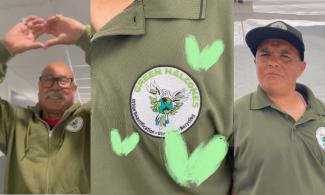

Inside a Worker-Owned Business in Raleigh
As the unflagging challenge of housing affordability spreads to all corners of the country, novel efforts to increase the prevalence of limited equity cooperatives (LECs) are getting underway. Long a model most associated with a handful of Northeastern markets, this new interest spans an array of cities in many different parts of the country, with projects taking shape in places as diverse as Missoula, Nashville, Seattle, and Portland, Maine.
This thesis attempts to broaden the understanding of workplace democracy and worker cooperatives particularly focusing on ownership, participation and leadership.
BALTIMORE, MD — On June 24th, Baltimore’s final fiscal year 2027 budget was approved by City Council—including, for the first time, money designated to support the conversion of businesses to worker cooperatives when the owners of those businesses wish to retire or sell. The city’s $250,000 commitment will enable an expansion of the work of Baltimore Roundtable for Economic Democracy to facilitate cooperative conversions to retain jobs, empower workers, avert commercial vacancies, and preserve locally-owned businesses.
Raising capital has long been a challenge for worker co-ops, who often lack the backing of external investors or the grant funding available to community-run ventures. One organisation is working to change that by pooling co-operators’ resources and distributing them democratically: Solidfund.
As a co-op itself, Solidfund operates on solidarity principles, including open membership and collective decision-making, with members deciding together how resources are used.
JWJ chapters have long engaged in organizing that extends far beyond union campaigns. In the 2020s, as housing justice, spurred by a growing housing affordability gap, has become more central to movement organizing and as tenant unions have been revived, these community coalition efforts have increasingly incorporated housing concerns.
The 26th issue of Arena Quarterly has a special section on cooperatives. Post-capitalist work, social engagement and new forms of housing are the centrepiece of this issue—how to cooperate with others to get all manner of things working for you, your communities, your comrades. This is the promise of the cooperative movement.
People everywhere in Roswell were living doubled up, on each other’s couches, and even in the dry river beds. They’d tried working with the city, but had been told that this was a “charity issue,” not one for the government to figure out. They disagreed, but set out nonetheless to find a solution.
And they did. The solution they came up with is one of the most efficient, cost-effective, and locally sustainable concepts I’ve ever heard-- and it’s working.
Big Tech platforms make it easy to start a group, but hard to build a community that controls its own future. Their priorities can change overnight, features stagnate or vanish, and your collective knowledge ends up locked inside someone else’s system—hard to find and harder to build on.