We need our national and international organizations to join us. I call on others to participate in building the movement while reframing and redirecting the Federation to become a member-controlled and -focused organization once again.
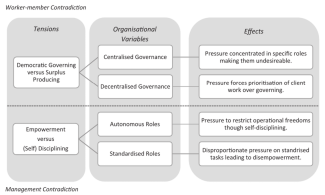
This article explores how union negotiations in worker-owned co-ops compare to more traditional labor negotiations. The theoretical analysis addresses possible synergies between practices traditionally considered as alternative, employee ownership and collective bargaining, and the development of collective bargaining in new business models.
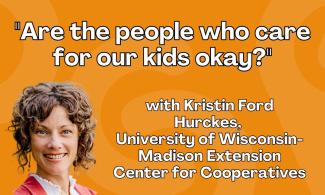
When child care is hard to find and harder to afford, some communities aren't waiting for a fix. Kristin Forde Hurckes of the University of Wisconsin-Madison Extension Center for Cooperative explains how cooperative models are helping - and where they hit their limits.
ASETT has three main objectives. One is to build for the future, which involves engaging in scenario planning. The second is to pilot and scale cooperative and social economy practices. And the third is to focus on knowledge generation and transfer to create a narrative that breaks down Mondragón’s isolation and builds support for a social and solidarity economy.
Ramsey Nassar, Gwen Pasquarello, and Andy Wallace at EMMA Technology Cooperative have spent five years as a worker-owned co-op building software and hardware for video games, theater, public installation, and media arts. And theme parks. And custom programming languages. And a nonprofit arcade collective. They're thriving.
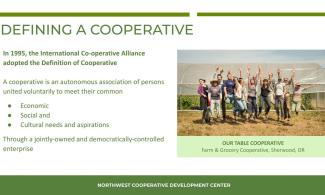
Usually, cooperatives are created by people as a reaction to specific, most often local, conditions. Through their joint action individuals show collective or social agency and the conviction that they must work together to pursue their shared interests. In this way, each new cooperative is an experiment and an attempt to change and innovate.
Unions and co-ops go together. This session outlines the practice of labor neutrality — when an employer commits to taking no position for or against their workers organizing and to voluntary recognize a labor union without requiring an election facilitated by a third party (commonly through a "card check" process) — and how workers in cooperatives can benefit from their employer proactively supporting their rights.
Across all conversations, participants described continually negotiating how and when aspects of their identity were disclosed, adapting to the needs of the people they supported while simultaneously managing their own sense of authenticity and professional identity.