
Originally published by The Tricontinental
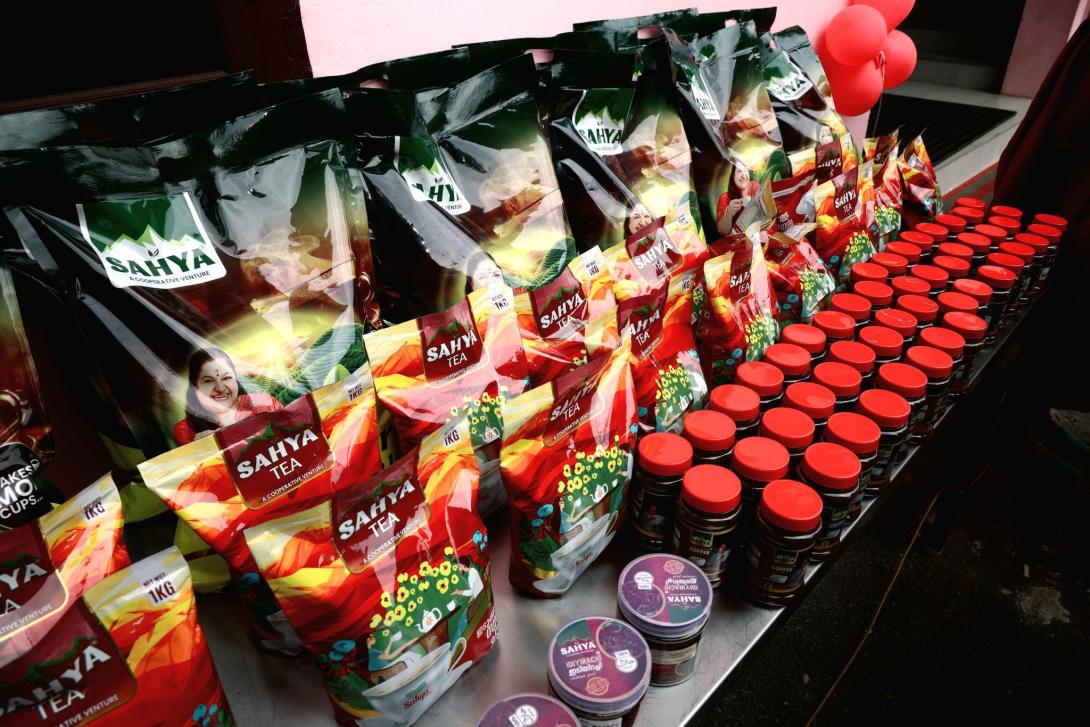
At the 35th conference of the All India Kisan Sabha (AIKS) in December 2022, every delegate received a pack of Sahya tea along with Kerala’s famous spices and other condiments. It was not until months later, during a visit to Assam to report on the decisions made at the conference, that one of the delegates took note of the brand of tea. Local delegates inquired about it, claiming that it was better than their world-renowned Assam tea. Their query led us on a quest to find out more about the brand and the collective effort that went into its emergence.
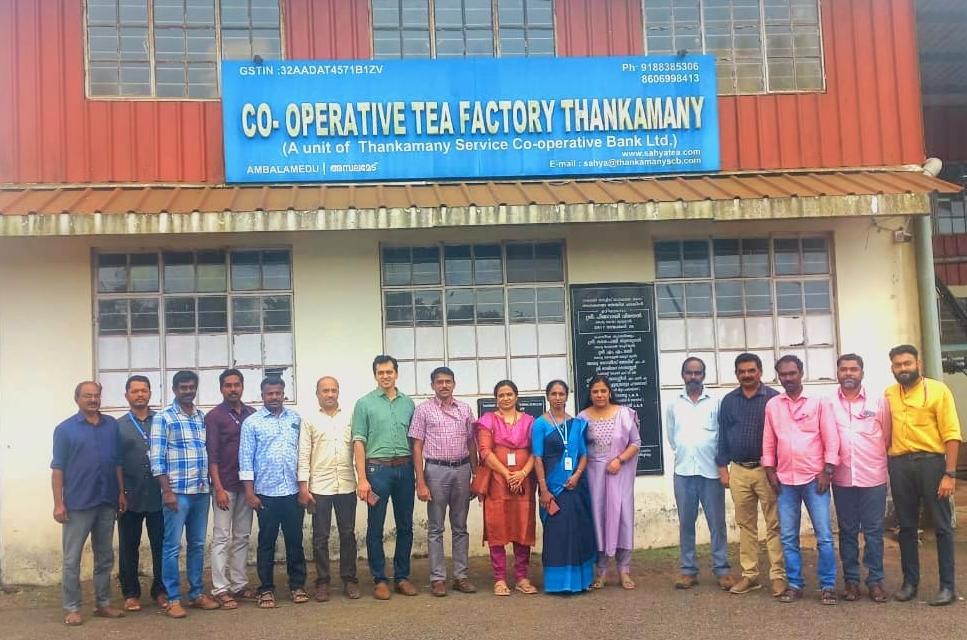
In a letter to Wilhelm Bracke on 5 May 1875, Karl Marx wrote, ‘every step of real movement is more important than a dozen programmes’.1 The story of the Sahya Tea Cooperative Factory, located in the remote area of Thankamany in the hilly district of Idukki, Kerala, shows the significance of the ‘real movement’ of socialism. Launched in 2017, the factory was established by the Thankamany Service Cooperative Bank, Ltd (founded in 1966). The Cooperative Bank has 15,000 members, most of them small peasants and workers, and operates in the Kamakshy village panchayat,2 which is mainly inhabited by small tea growers. The Thankamany Cooperative Tea Factory mostly manufactures black, green, and a variety of blended teas.
The cooperative bank and tea factory must be understood within the broader trajectory of Kerala’s communist-led cooperative movement.3 Russia’s 1917 October Revolution had a tremendous impact on Kerala’s progressive movements and helped reshape their orientation within the national movement. In 1934, the strongest sections of these movements formed the All India Congress Socialist Party. Five years later, the party’s Kerala unit went on to transform itself into the Kerala unit of the Communist Party of India, which eventually built the AIKS and a number of trade unions in the region. It was in this period and in this context that the AIKS and other progressive forces began to intervene in the cooperative movement and confront the British strategy of keeping cooperatives insulated from the intensified class struggle that was erupting in the 1930s and 1940s. For instance, as EMS documented, during the People’s War (1941–1945)4 communists pressured the imperialist British government to procure grain from landlords and distribute it through ration shops, which were subsequently converted into producer and consumer cooperative societies.5 Communists in Kerala identified building cooperatives as part of the expanding class struggle, distinct from the benevolent colonial idea of cooperatives derived from the Rochdale Principles, which have served as the primary guidelines for cooperatives since 1844.6
The dialectical relationship between building a strong working-class organisation that opposes imperialism and building cooperatives had already been established in the AIKS’s 1943 resolution on cooperatives, passed at its 7th Session. This resolution called on AIKS cadres to initiate cooperatives as a strategy to combat the economic and social subjugation of the peasantry. The insights from this resolution, particularly EMS’s note ‘Organisation – Not a Machine’, emphasised the necessity of militant class organisation to prevent cooperatives from devolving into ‘abstract politics’ and provided a crucial framework for later discussions on building cooperatives.
By the time communists and cooperative movement leaders convened in Thrissur in October 1956, the focus had shifted from the theoretical foundation laid in 1943 to the practical challenges of implementing this foundation in Kerala.7 During the meeting, participants took stock of the cooperatives’ activities in Kerala and criticised the delusions of Prime Minister Jawaharlal Nehru’s bourgeois landlord regime, which suggested that the creation of cooperatives by itself would lead to socialism. The participants made the point that communists had to be consciously involved in the organisation of cooperatives and enrol large numbers of working people into these and other mass organisations in order to ensure their political education in the process. Reference was made to the successful cooperative rural credit societies and banks, which had eliminated the stranglehold of moneylenders and nourished agricultural production, thereby increasing the income of the peasantry and agricultural workers. What distinguished these cooperatives from unsuccessful ones was the role of communists in ensuring that the cooperative form was not coopted by reactionaries who tried to maintain old forms of rural power.
The Emergence of Small Tea Growers
In the late 1990s, the tea industry underwent a sweeping restructuring driven by the profit fetish of monopoly capital, marked by mergers, acquisitions, and an aggressive focus on brand building. Vertically integrated monopolies such as Unilever and Tata – known as Big Tea – abandoned direct ties to agricultural production and divested from tea estate ownership and management. For instance, in March 2000 Tata acquired Tetley Group, the world’s second-largest tea manufacturer and distributor, for £271 million.8 Both Tata and Unilever, the world’s largest tea company, shifted to creating and marketing new branded teas – including crush, tear, and curl (CTC) as well as blended tea products – aimed at a variety of tastes and price ranges.
This transformation coincided with a financial crisis in tea estates, which grow and process tea and are largely managed by non-monopoly capital. While most estates were sold to smaller firms, the monopoly companies secured their supply through contractual clauses that guaranteed access to sufficient unprocessed tea. As Professor Natalie Langford observes, the industry shifted from ‘vertical integration’ to value chains in which ‘firms have sought to advance their competitive position through the outsourcing of lower value-adding activities’.9 In practice, Big Tea considered agricultural production and estate management the most troublesome links in the chain, as they were heavily regulated by labour and environmental law, and sought to distance themselves from these sectors to avoid class struggle. Instead, they consolidated control over higher value-added activities such as blending, packing, branding, distribution, and sales. Meanwhile, small tea growers rose as the main producers of tea leaves: their share increased from 7% in 1991 to 52% in 2022 and is projected to reach 70% by 2030.
Before the formation of the Sahya Tea Cooperative Factory, the roughly 3,500 small tea growers in the Idukki area operated under the stranglehold of a system run by monopoly firms such as Tata and AVT Beverages (a leading player in southern India). These large companies bought green leaves (freshly plucked, unprocessed tea leaves) from both the farmers and ‘agents’ (intermediaries who often act as buyers on behalf of factories, typically charging a commission on the green leaf collected from small farmers) at ‘an arbitrary rate and [under] humiliating terms and conditions’, a group of farmers told us. Many of the farmers shared stories with us about how companies turned away their green leaves when they tried to bargain for a fair price, inventing superficial excuses which forced the farmers – who had carried the leaves from far away – to dispose of them or use them as manure. Scenes of dispirited farmers returning home on their tractors with their rejected crops were commonplace. These methodically planned rejections were designed to create a docile peasantry that would be inured to selling their crops to the companies at low prices. The entire system was highly favourable to the large companies.
In the absence of successful cooperative action, trading agents generally charge small growers across India a commission of 15%–20% per kg of green leaves. A large chunk of this is sold to bought leaf tea factories, which process tea from purchased leaves rather than growing their own. Another chunk is sometimes sold to tea estate factories owned by big plantations. Trading agents evaluate the quality and price of the leaves based on their ‘fine leaf count’ (the proportion of young, tender leaves and buds, which determine the tea’s overall quality) in a very subjective way, compromising the interests of small farmers.10
Bought leaf tea factories usually sell their processed tea at auctions. Since the process is controlled by Big Tea companies (the primary buyers), the tea is sold at distorted prices.11 The entire auction mechanism in India is designed in such a way that the basic postulate of neoclassical economics – that the interaction between supply and demand determines prices – appears as a farce. On the other hand, estate factories typically sell only half of their processed tea at auctions, as mandated by the regulations outlined in the 1983 Tea Marketing Control Order (itself under the 1953 Tea Act), and sell the other half through more profitable private channels.
Auction participants consist of major tea packing companies, trading agents, and other leading packet tea brands. Since these companies then undertake value-added processes such as blending, sorting, grading, and packaging the tea before distributing it to consumers, small tea growers, who are on the lower end of the value chain, receive a disproportionately lower share of consumer spending on tea – around 15%. Tea packing companies, on the other hand, which are mostly big monopoly companies, receive 50% of consumer spending on tea. That is why it is imperative for small tea growers to climb the value chain and gain direct access to markets in order to secure better prices.12 This is exactly what the Sahya Tea Cooperative is setting out to accomplish with its brave move to enter the terrain of Big Tea.
Cooperative Tea
It was the difficult circumstances facing farmers that drove AIKS members to form the Sahya Tea Cooperative in 2017. Designed to process 15,000 kg of green leaves per day, the Sahya Tea Cooperative generates employment for more than 150 workers, most of them recruited from the agricultural working class and peasantry, while also protecting the interests of the peasants amongst the small tea growers. When we visited the cooperative factory and catchment area in September 2023, what caught our attention was the visible confidence among the small tea growers.
The first three years of the cooperative, from 2017 to 2020, were challenging: not only did it have to begin to pay back the large loan it had taken at 12% interest, but it was besieged by a number of shocks, such as the 2018 Kerala flood and the COVID-19 pandemic (2020–2023). Yet, despite the financial challenges the cooperative faced, it was able to procure green leaves and pay farmers INR 12 per kg (far higher than the corporate rate of INR 7 per kg). The cooperative’s steady prices in turn forced the corporate tea suppliers to increase the rates they pay to small tea growers.
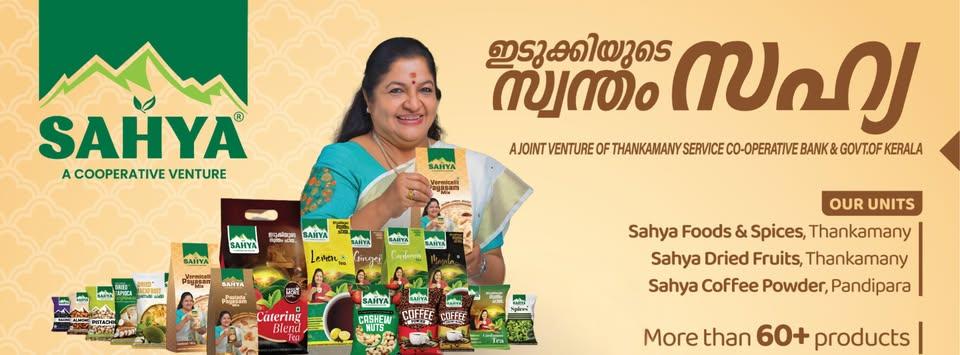
The cooperative’s leadership convened peasants and workers to brainstorm how to improve their financial situation. Since Big Tea companies dominated the market with their packaged tea products, they decided to improve their marketing strategy and launch an effort to make inroads into the market. KS Chithra, a popular singer known as the ‘Nightingale of Kerala’, became the Sahya Tea Cooperative’s brand ambassador and helped popularise its brand, refusing to take any payment for her work. To strengthen its market presence, the cooperative also made use of Kerala’s Public Distribution System, such as Supplyco (Kerala State Civil Supplies Corporation) and Consumerfed (Kerala State Cooperative Consumers’ Federation), as well as the system that provides goods to police canteens.
The cooperative also received other forms of support from the state, such as in 2020–2021 when Kerala’s state government bought Sahya tea for the food kits distributed during the pandemic. As a result of these creative marketing mechanisms and state assistance, the cooperative turned a profit in its fourth year (2020–2021) and began to pay INR 18 per kg for green leaves and distribute the profits as incentives to the farmers who supplied the leaves. This set a historic precedent: for the first time, farmers were remunerated fairly for their contributions.
- 1
Karl Marx, ‘Letter to Wilhelm Bracke’, in Marx/Engels Selected Works, vol. 3 (Moscow: Progress Publishers, 1970), 11.
- 2
A panchayatis a local self-government body in India that is primarily responsible for governance and development in rural areas. It operates at the village, block, or district level as part of India’s decentralised administrative system.
- 3
Pyaralal Raghavan, ‘Growth and Performance of Cooperatives in Kerala: A Preliminary Analysis’, AK Gopalan Centre for Cooperative Enterprises and Alternative Politics, Kannur University, Kerala, 2019, https://papers.ssrn.com/sol3/papers.cfm?abstract_id=4031735.
- 4
The stage of World War II after the Soviet Union entered the war is referred to as The People’s War.
- 5
EMS Namboodiripad, With the Ploughshare and the Sickle: Kisan Sabha in the Campaign for More Food (Bombay: People’s Publishing House, 1943).
- 6
Camila Piñeiro Harnecker, Cooperatives and Socialism: A View from Cuba (New York: Springer, 2012).
- 7
E Gopalakrishna Menon, Cooperatives Movements and Communists (Ernakulam: Prabhat Book House, 1956).
- 8
Financial Staff, ‘Tata Tea Pays £271m for Tetley’, The Guardian, 28 February 2000, https://www.theguardian.com/business/2000/feb/28/2.
- 9
Natalie J Langford, ‘From Global to Local Tea Markets: The Changing Political Economy of Tea Production within India’s Domestic Value Chain’, Development and Change 52, no. 6 (2021): 11.
- 10
Policy Report to Support Development of Small Tea Growers in India, Solidaridad Network Asia Limited, February 2023.
- 11
Kingshuk Sarkar, ‘Trends and Price Formation Mechanism in Indian Tea Auctions’, NRPPD Discussion Paper 23 (2013), https://cds.edu/wp-content/uploads/2021/02/NRPPD23.pdf.
- 12
Roopak Goswami, ‘Small Tea Growers Report Looks at Farming Issues in India, Better Pricing Models, the Future of Tea’, World Tea News, 7 June 2023, https://www.worldteanews.com/origins/small-tea-growers-report-looks-farming-issues-india-better-pricing-models-future-tea.
Add new comment