
19 views
Please support the Black Coffee Co-op in our relocation to our Forever Home!
Visit the Black Coffee Co-op's Indiego-go page
Go to the GEO front page
Please support the Black Coffee Co-op in our relocation to our Forever Home!
Visit the Black Coffee Co-op's Indiego-go page
Go to the GEO front page
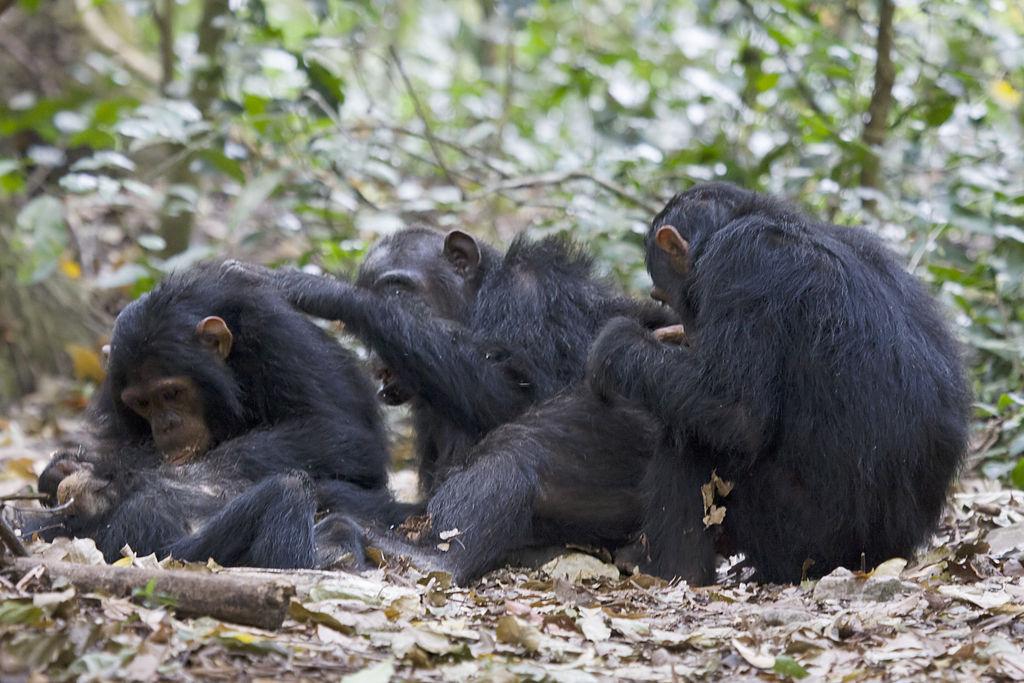
The human response to unfairness evolved in order to support long-term cooperation, according to a research team from Georgia State University and Emory University.
Fairness is a social ideal that cannot be measured, so to understand the evolution of fairness in humans, Dr. Sarah Brosnan of Georgia State's departments of Psychology and Philosophy, the Neuroscience Institute and the Language Research Center, has spent the last decade studying behavioral responses to equal versus unequal reward division in other primates.
In their paper, published in the journal Science, she and colleague Dr. Frans de Waal of the Yerkes National Primate Research Center and the Psychology Department at Emory University, reviewed literature from their own research regarding responses to inequity in primates, as well as studies from other researchers. Although fairness is central to humans, it was unknown how this arose. Brosnan and de Waal hypothesize that it evolved, and therefore elements of it can be seen in other species.
Read the full article at Phys.org
Go to the GEO front page
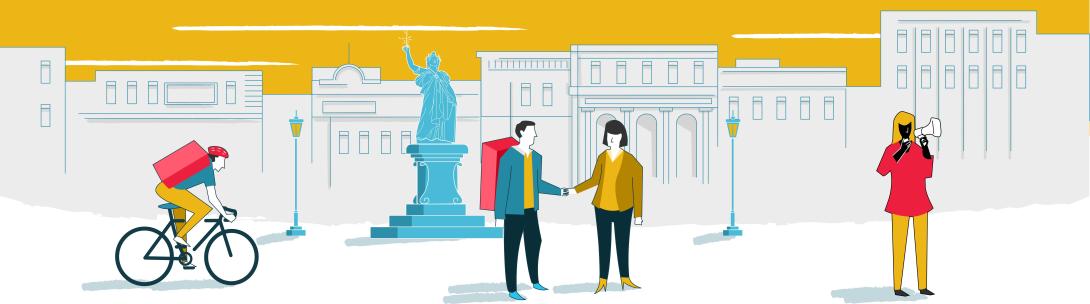
Unions in Greece have organised a huge portion of the workforce, and this is the primary source of their strength. In the UK, unions struggle particularly to unionise young private sector workers, making the gig economy—which depends on this demographic—a corporate dream – but success on this magnitude will only yielded with similar numbers.
Perhaps, however, the solution for workers lies not within but away from these corporate giants. Across Europe, CoopCycle, a federation of worker-owned courier platforms, have set up courier co-ops in 63 cities. The member co-ops use and develop shared software, allowing new cooperatives to get off the ground without needing to pay for expensive app development.
One recent addition to the federation that exemplifies the benefits of worker ownership is Wings, a courier company operating in North London. Unlike Deliveroo, Wings pays all its riders London Living Wage and grants the right to sick pay and other benefits. All its deliveries use zero-emission transport like bikes, and most critically, workers have a voice and stake in the business, governing the enterprise democratically on a one-member-one-vote decision-making basis and receiving a share of any profits.
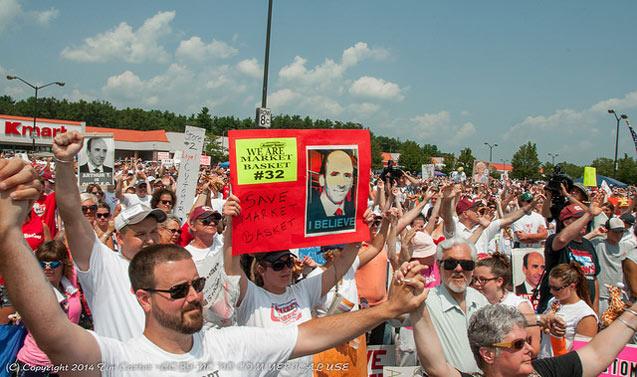
What is really important to know about this is that not only workers were behind this, but managers too; sixty-eight of seventy-one store directors were openly in support of bringing Arthur T. Demoulas back. Each store, while remaining open, asked customers to boycott. The distribution centers and warehouse workers kept the food from getting to the stores, and stores refused to accept deliveries or to stock the shelves. The board threatened to fire people, but no one went back to work. Customers pledged not to shop at Market Basket until Arthur T. Demoulas was reinstated as CEO.
And they were, collectively, able to cripple the company. The saga came to an end when Arthur T. Demoulas made an offer to buy the other half of the company. It took weeks to negotiate this deal but once it was announced, within minutes, workers were back in the warehouse and the stores. Customers cheered and were back as soon as the fresh produce hit the shelves.
We are left with one question: And how did a CEO inspire collective action by non-union employees, and effectively force the sale of a $4 billion company? This is the business story of the year.
On Thursday, September 25, the Sloan School of Management’s Institute for Work and Employment Research, the MIT Political Science Department, and Boston Review convened a diverse group of faculty and community leaders to discuss the lessons that can be drawn from these astonishing events. The event attracted a full auditorium of students, faculty, Market Basket customers, and others eager to share their thoughts and hear from others, and 649 additional participants via live streaming. We offer excerpts from the panelists below . . .
Read the full article at Boston Review
Go to the GEO front page
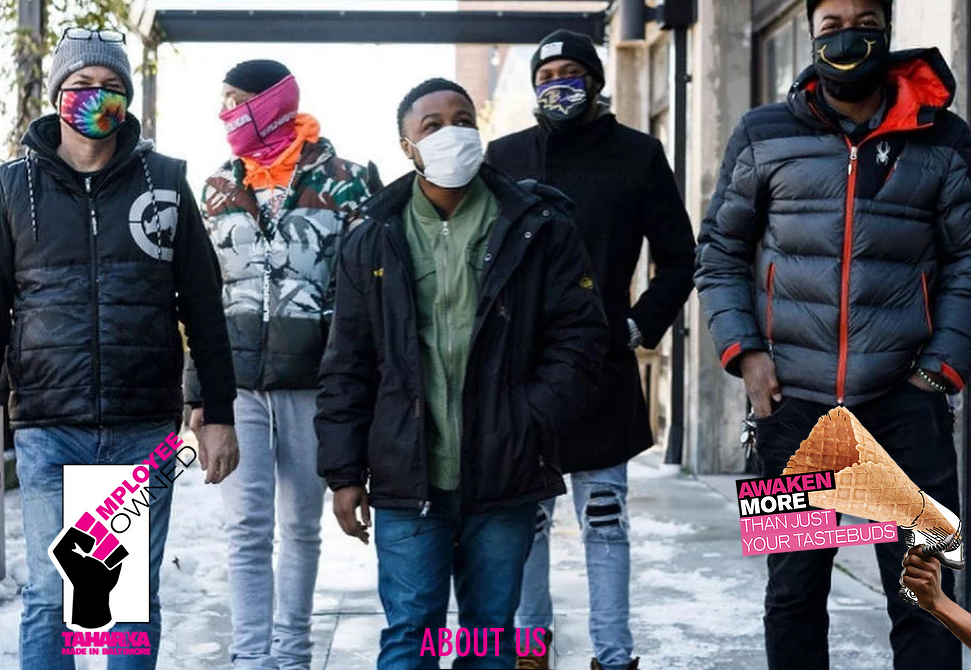
On a recent fall morning, despite the chill in the air, workers at Taharka Brothers Ice Cream were packing a freezer truck and a van with pints of honey graham, peanut butter cup and pistachio. In the office, business metrics on retail performance, catering and home delivery moved across a screen on the wall. “It’s a really busy day,” said Detric McCoy. “Even right now, I don’t think I could run it by myself.”
He doesn’t have to.
In December 2020, Taharka officially became a worker-owned cooperative, and McCoy shares responsibilities that would typically fall on one person’s shoulders with four other worker-owners.
Read the rest at The Washington Post
Add new comment