
Introduction: Possible Communism
[Editor's note: over the next weeks we will be serializing a recent report from the Tricontinental: Institute for Social Research, and the Uralungal Labour Contract Cooperative Society Research Centre. The main body of the report is composed of six case studies of widely varied cooperatives in Indian state of Kerala. This introduction presents some history of the cooperative movement in Kerala and provides a few key insights from the movement's long-term success.]
Originally published by Tricontinental
But there was in store a still greater victory of the political economy of labour over the political economy of property. We speak of the cooperative movement, especially of the cooperative factories raised by the unassisted efforts of a few bold ‘hands’. The value of these great social experiments cannot be overrated. By deed, instead of by argument, they have shown that production on a large scale, and in accord with the behest of modern science, may be carried on without the existence of a class of masters employing a class of hands; that to bear fruit, the means of labour need not be monopolised as a means of dominion over, and of extortion against, the labouring man himself; and that, like slave labour, like serf labour, hired labour is but a transitory and inferior form, destined to disappear before associated labour plying its toil with a willing hand, a ready mind, and a joyous heart.1
– Karl Marx, Inaugural Address of the International Working Men’s Association, 1864.
Misery greets the planet. Poverty persists for billions of the world’s people. Climate change – the product of capitalist expansionism – threatens the survival of life on Earth. Wars of grotesque proportions creep across the globe in myriad forms, including Israel’s genocide against Palestinians in Gaza, as famines driven by human behaviour plague swathes of the population. It is as if the five horsemen of the apocalypse are no longer sufficient – instead, untold horsemen ride around the planet suffocating the possibilities of human life.
All of this contributes to the sense that nothing other than this nightmare is possible, that alternatives cannot be imagined. When resilient people dare to think of a better future, as they inevitably do, those in power meet them with mockery and strive to snuff them out. It is better for the powerful and the propertied to see to it that no alternative is allowed to flourish. The survival of even one kernel of hope would call into question the claim that History has ended.
One of these kernels is the Indian state of Kerala (population of 35 million), which has a rich history of socialist construction. Ten years after India won its independence in 1947, the Communist Party of India won state elections in Kerala. Right from the start, the left government in Kerala adopted an agenda to smash ancient social hierarchies and customs, provide social goods to the public that were not readily available in the rest of India (including quality public education, health care, and transportation), and construct the basis of working-class and peasant power by defending workers’ rights to organise in unions and build cooperatives. Though the national government in Delhi unconstitutionally removed the communist state government in Kerala in 1959, the agenda set by the left remained largely in place. The left has returned to power periodically (1967–1969, 1980–1981, 1987–1991, 1996–2001, 2006–2011, and 2016–present), each time expanding the agenda of decentralisation, encouraging public action, and building the basis for social democratic state institutions.2 Even when the right came to power in the intervening years, it was not able to undermine the dynamic that had been set in motion by the left governments. It was in this context that the cooperative movement developed in Kerala.
People who are critical of the capitalist system are often as critical of the alternatives being built within the parameters of this system because they argue that such institutions are captive to capitalism’s logic. But this is a flawed assessment of cooperatives, which are – in fact – incubators of different logics of life and work that serve as beacons of inspiration and hope, offering a window into what humanity is capable of once the fetters of capitalism are transcended. Cooperatives provide schools for the working class and peasantry to learn how to build social relations based on a different economic foundation. In his third volume of Capital, Marx wrote:
The cooperative factories of the labourers themselves represent within the old form the first sprouts of the new, although they naturally reproduce, and must reproduce, everywhere in their actual organisation all the shortcomings of the prevailing system. But the antithesis between capital and labour is overcome within them, if at first only by way of making the associated labourers into their own capitalist, i.e. by enabling them to use the means of production for the employment of their own labour. They show how a new mode of production naturally grows out of an old one, when the development of the material forces of production and of the corresponding forms of social production have reached a particular stage.3
Marx’s insight here is crucial. Cooperatives are neither inherently mired in the capitalist law of value, nor are they easily able to transcend it. They are ‘sprouts’, he writes, of an alternative through which the working class can experiment with the annulment of capitalist management. Marx looked with great pride at the workers’ utopia being built in the Paris Commune of 1871, where he saw how the communards developed workers’ cooperatives and other means of building a new society amidst the jubilation of toppling the Second Empire of Louis Napoleon III (1852–1870).4 In The Civil War in France, Marx wrote that during the two months of the commune’s existence, from March to May 1871, the commune was the ‘form at last discovered’ for the future workers’ state. It was in this text that Marx wrote of the insights of cooperatives:
If cooperative production is not to remain a sham and a snare; if it is to supersede the capitalist system; if the united cooperative societies are to regulate national production upon a common plan, thus taking it under their control and putting an end to the constant anarchy and periodical convulsions which are the fatality of capitalist production – what else, gentlemen, would it be but communism, ‘possible’ communism.5
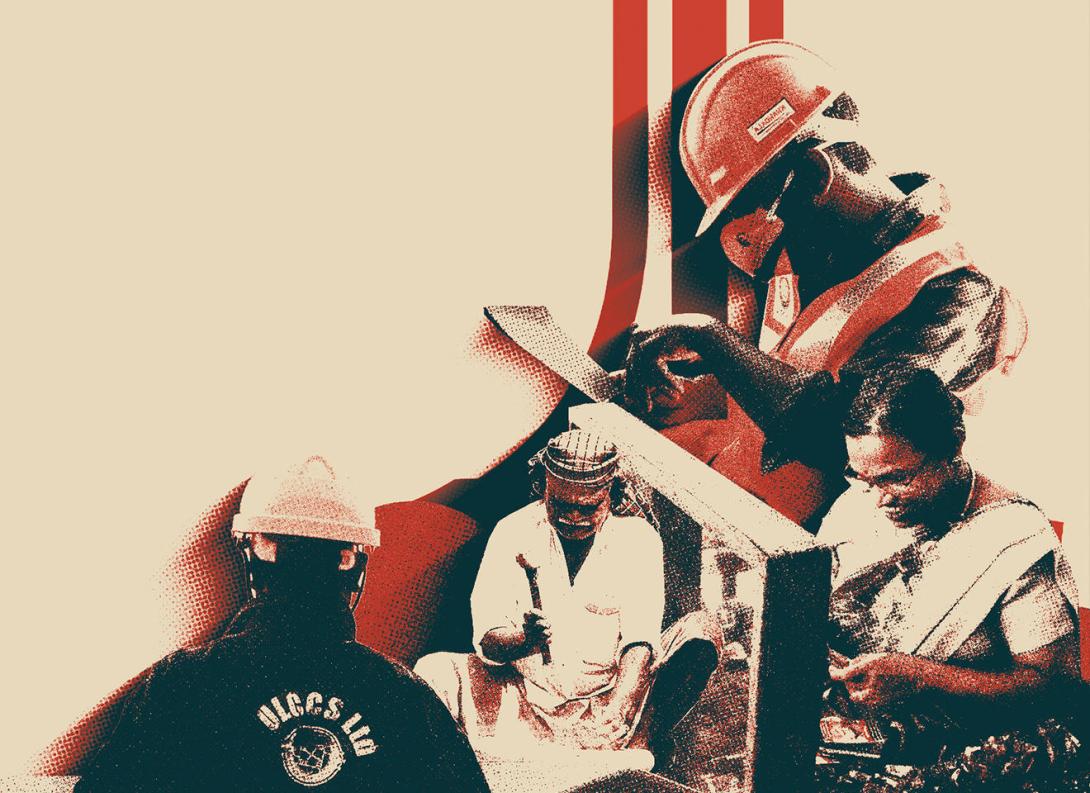
This text, The Cooperative Movement in Kerala, India, is part of a series from Tricontinental: Institute for Social Research called Studies on Socialist Construction. It is about possible communism, the possibilities in our time of a future society. An honest appraisal of a heroic venture, this study shows us that Kerala’s cooperatives have been able not only to survive in a small niche, but also to grow into substantial institutions that have become an integral part of the region’s social life. There are 16,429 registered cooperative societies in Kerala today (12,278 of which are active, 3,354 of which are dormant, and 797 of which are under liquidation).6 Cooperatives operate in a wide range of sectors, from the production and distribution of goods and services to hospitals and restaurants to agricultural production and housing construction. The largest cooperative (although not strictly registered as a cooperative), Kudumbashree, has 4.8 million members, all of whom are women. One in four women in Kerala is a member of this cooperative. There are also many cooperative-like organisations that are registered as charitable societies and trusts, such as the Brahmagiri Development Society, which focuses on agrarian development, and the Janatha Charitable Society, a major milk producer. Most of the active cooperative societies have branches in different parts of the state.
There are, of course, challenges and contradictions, and these are discussed with clarity: there is no sense in exaggerating the possibilities presented by cooperatives that must struggle to survive in a world where the capitalist law of value is the law of the land. Nor is there sense in minimising these cooperatives’ important contributions to the people who live in Kerala – both in material and spiritual terms. These cooperatives are not merely a source of inspiration: they provide a blueprint for cooperatives around the world as seeds of a just future that exist within the confines of capitalism today.
Kerala’s Cooperatives
In 1943, at the 7th Session of the All India Kisan Sabha (AIKS, the country’s largest farmers’ union) in Bhakna Kalan, Punjab, the delegates discussed a range of issues, including the building of cooperatives. In one of their resolutions, the AIKS argued that cooperatives could help the farmers fight the ‘distress and humiliation’ of capitalist and colonial agriculture and enable them to achieve ‘economic, social, and national freedom’. During the deliberations, communist leader EMS Namboodiripad (1909–1998), or EMS as he was called, wrote a note entitled ‘Organisation – Not a Machine’. In the note, EMS pointed out that the resolutions would mean nothing without militant organisation that goes beyond ‘abstract politics’. Cooperatives would need to be built by the peasantry and agricultural workers to expand the democratic revolution and build the confidence of rural workers.7
In October 1956, the Communist Party of India held a meeting in Thrissur, Kerala, that focused on cooperatives. The meeting was chaired by Professor Joseph Mundassery, who would become the first minister of education and cooperation during EMS’s tenure as the chief minister of Kerala (1957–1959), and resolved that rather than allow the cooperatives to become a ‘pocket borough’ of the feudal classes, working people themselves would build them and there would be political education about the role these cooperatives played in building democracy and socialism. The party leadership also emphasised the need for successful rural credit societies and cooperative banks controlled by communists and workers as a way of eliminating the stranglehold of the moneylenders, nourishing agricultural production, and improving the living conditions of peasants and agricultural workers. It is out of this ideological clarity that Kerala’s cooperatives emerged to become a beacon for democratic worker-led cooperatives around the world.
Brief portraits of some of Kerala’s cooperatives make up the rest of this study. These portraits are written by scholars and political leaders who have worked closely with the cooperatives to learn about them and assess them. The data in the essays has been largely accumulated from the cooperatives and from government documents. We are grateful to the UL Research Centre for assisting us with this work.
These essays reveal some important facts:
- The cooperative sector in Kerala would not have flourished without a long history of social reform that created the social basis for cooperation. When news about the Soviet Union trickled into Kerala, people involved in the social reform and anti-caste movements expressed their curiosity about its attempts to reconstruct social and economic relations. This curiosity led to studies about the cooperative movement in the Soviet Union, which were then presented in social reform and anti-caste movements’ public meetings.
- The cooperative sector developed due to the vitality of the class struggle in Kerala, where organised peasants and workers pushed the social reform movement to combine the struggles against caste, landlordism, and colonialism. It was in these struggles that the peasant movement – mainly in northern Kerala – took the initiative to start peasant cooperatives to help the most impoverished amongst them. The emergence of these cooperatives weakened the grip of landlords, who could no longer lend money at usurious rates to the indebted peasantry or continue to be their main provider of consumer goods. Instead, they watched as the peasant cooperatives lifted the confidence of the masses. The success of cooperatives led to their duplication in other parts of the region, building on the organisational habits of mass movements.
- The first communist ministry that came to power in Kerala (1957–1959) received mass support from the mass social reform movement and was bolstered both by the class struggle of previous decades and by the success of the cooperative movement. In turn, the communist government used a part of Kerala’s social wealth to finance the growth of more cooperatives across the state. The government set up coir (coconut fibre), handloom, and toddy (fermented coconut sap that is an alcoholic drink) cooperatives to enhance these sectors of the economy and improve the working conditions and wages of the workers.
- The emphasis on building cooperatives to ensure mass employment and higher wages as well as to improve the efficiency and productivity of different enterprises meant that cooperatives could compete against the private sector.
- The leadership of oppressed castes was drawn to the cooperative system and saw in them an opportunity to realise their independence and emancipation. At the December 1929 Cheramar Samajam Conference, for instance, the organisation’s president, Chaajan, told the two thousand members of the Pulaya community present there that these cooperative societies, along with education programmes and an anti-alcohol campaign, would be crucial for their struggles.8
- The role of political education within cooperatives enabled their members to understand what they were building (socialism) and how what they were building was different – and better – than what the private sector had built (capitalism).
- Without an extensive network of financial cooperatives, the entire sector would have been starved of funds. This system has also depended on the left’s periodic entry into government, which has prevented the large-scale privatisation of Kerala’s credit markets.
- The cooperatives’ democratic structure, alongside the innovation of their members, allows them to diversify their work and adapt to the changing times. When tobacco consumption habits changed, for instance, the Dinesh Beedi9 Workers’ Central Cooperative Society shifted to food production.
- A key element in Kerala’s cooperative movement is its commitment to social change, with an emphasis on using cooperative organisation to transcend patriarchy (through women’s cooperatives), caste hierarchies (through oppressed caste cooperatives), discrimination against tribal or Adivasi communities (through Scheduled Tribe10 cooperatives), and discrimination against transgender communities (through transgender cooperatives) as well as to promote equality for people with disabilities.
This study shows how effective these cooperatives have been in promoting a social form of economic activity that offers a counter to the pressures of capitalism. In that regressive form of economic competition, workers’ livelihoods are the first to be dismissed, while profit is enshrined as a god. Kerala’s cooperatives invert this value system, putting the needs – and dignity – of the working class at their heart.
- 1
Karl Marx, ‘Inaugural Address of the Working Men’s International Association’, London, 21 October 1864, https://www.marxists.org/archive/marx/works/1864/10/27.htm.
- 2
In 1964, the Communist Party of India split into the Communist Party of India (Marxist), or CPI(M), and the Communist Party of India (CPI). The government in Kerala has been led by the CPI(M) and has included the CPI and other left and democratic parties as coalition partners in the following periods: 1967–1969, 1980–1981, 1996–2001, 2006–2011, and 2016–present. The period from 1969 to 1977 saw a coalition government that included the CPI and the Indian National Congress as the main partners; the CPI(M) was in the opposition.
- 3
Karl Marx, Capital. A Critique of Political Economy, vol. 3 (New Delhi: LeftWord Books, 2010), 440.
- 4
For more on the Paris Commune, see: Tricontinental: Institute of Social Research, Paris Commune 150, (New Delhi: LeftWord, 2021), https://thetricontinental.org/text-paris-commune/.
- 5
Karl Marx, ‘The Civil War in France’, in Collected Works, vol. 22 (Progress Publishers, 1986), 335.
- 6
‘Number Statement 2025’, Department of Cooperation, Government of Kerala, 31 March 2025, https://cooperation.kerala.gov.in/wp-content/uploads/2019/04/Number-statement-2025.pdf.
- 7
Ashique Ali Thuppilikkat, ‘A Short History of the Cooperative Movement in Northern Malabar, Kerala’, Economic and Political Weekly 59, no. 30, 3 August 2024.
- 8
Malayala Manorama, 29 December 1929.
- 9
Beedi are a type of hand-rolled cigarette.
- 10
In India, the government has ‘schedules’, or lists, of castes and tribes that are the most socioeconomically disadvantaged or historically oppressed. People belonging to Scheduled Castes and Scheduled Tribes are entitled to certain rights and benefits.
Add new comment