Earlier this month, Oakland Bloom, a volunteer-based nonprofit collective that provides career support to refugee and immigrant chefs, softly opened Understory, its worker-led restaurant, bar and commissary kitchen. Understory gives chefs who are looking to start their own food businesses hands-on experience and supplemental earned income as they continue their training. At the same time, local diners get a chance to taste what they’re cooking.
After a couple of weeks of test service, Understory is ready to officially open its doors this Thursday, March 25, from 4-8 p.m. Its regular days of service will be Thursday through Saturday, with a special weekly pop-up event on Sundays, featuring fare from a chef participating in Oakland Bloom’s Open Test Kitchen incubation program.
Related content
Sharing Like We Mean It
This report sets out to show that the co-operative model is a real alternative to competitive and individualized patterns of work. Building on Dave Boyle and Kate Oakley’s reflections on why co-operatives and creative industries are a good fit, this report is based on research we carried out in 2019 and 2020 on co-ops in creative industries in Canada, the UK, and the US. We designed and distributed an online survey completed by 106 co-ops and interviewed 12 members of worker co-ops.
Our research reveals a small but vibrant co-operative landscape in the cultural and tech sectors, from co-operatively run art galleries to co-op advertising agencies, web development companies, architecture firms, coworking spaces, ceramic studios, and film production rental services.
Our findings showcase the diversity of co-operative practice in the creative industries. Statistical data give an overview of the sector and co-op profiles illustrate what co-operative work can look like in practice. While this report will be of interest to established co-operators who want to learn more about how other co-ops operate, Sharing Like We Mean It is geared to cultural and tech workers who may be drawn to the co-operative idea but want to better understand its practicalities and potentials. But this report is not a how-to guide on starting a co-op. For anyone wanting to take concrete steps towards working co-operatively, we note some of many excellent resources available in the Co-op Support Systems section of this report.
Read the rest at Cultural Workers Organize
Cooperatives and the Sustainable Development Goals
[C]ooperatives are well-placed to contribute to sustainable development’s triple bottom line of economic, social and environmental objectives plus the governance agenda, not least because they are enterprises that endeavour to meet the economic progress of members while satisfying their socio-cultural interests and protecting the environment. They offer an alternative model for enterprise, with contributions to sustainable development well beyond job creation. Since cooperatives’ share in GDP and total enterprises is relatively small in most countries at present, the promotion and expansion of cooperatives could be an important instrument for achieving the Sustainable Development Goals (SDGs).
This brief highlights the contribution of cooperatives to sustainable development and stimulates discussion on the role of cooperatives in the design and implementation of the Sustainable Development Goals (SDGs) that will succeed the Millennium Development Goals.
Read and download the full report from the International Co-operative Alliance and the International Labour Organization here.
Madison Council Reduces Limitations for New and Existing Co-ops
The Madison Common Council has agreed to decrease the limitations on establishing housing cooperatives, or co-ops, throughout the city.
At their February 2nd meeting, they passed a new ordinance that will make it easier for new co-ops to be built in areas where they could not previously.
Before this ordinance, many of those looking to establish a co-op would have to get approval from the city planning and zoning agencies, and would need to go through a drawn-out permit process.
With the newly amended ordinance, future co-ops will face significantly less red tape.
Report: Expanding New York City's Solidarity Economy
A vision of a community-led “solidarity economy” is capturing the attention of a new generation of progressive New Yorkers. Seeking to address the ecological, economic, and political crises of our time, local groups are reinvigorating cooperative economic models and inventing new ones, putting into action a vision for an economic system that is based on values of social and racial justice, ecological sustainability, cooperation, mutualism, and democracy. They are creating and sustaining worker cooperatives, community development credit unions, community land trusts, low-income housing and food co-ops, and community gardens -- strengthening neighborhoods, making them more resilient, and meeting community needs.
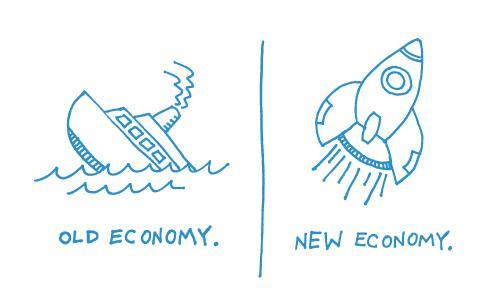
Together, these efforts offer a pragmatic vision for grassroots, community-led economic development that benefits all New Yorkers. Through democratically-structured local institutions, marginalized New Yorkers, in particular, including low-income immigrants, women, and people of color, are gaining control over their workplace, housing, finance, land use, and food. They are also building a movement, as new leaders develop democratic decision-making skills needed to challenge systemic poverty and oppression.
Read the full report from the Cooperative Economics Alliance of New York City (CEANYC) here
Go to GEO's home page
A vision of a community-led “solidarity economy” is capturing the attention of a new generation of progressive New Yorkers. Seeking to address the ecological, economic, and political crises of our time, local groups are reinvigorating cooperative economic models and inventing new ones, putting into action a vision for an economic system that is based on values of social and racial justice, ecological sustainability, cooperation, mutualism, and democracy. They are creating and sustaining worker cooperatives, community development credit unions, community land trusts, low-income housing and food co-ops, and community gardens -- strengthening neighborhoods, making them more resilient, and meeting community needs.
Add new comment